Self-hosted ERP alternative · India

A self-hosted ERP alternative: own the system your operations run on.

Once orders, stock and dues outgrow Excel and WhatsApp, you have four realistic options. Rent a SaaS ERP. Implement an open-source ERP yourself. Buy desktop billing software. Or have a system customized to your operation and installed on your own server. Here is how they actually compare — and what self-hosting asks of you in return.

On-premise, VPS or private cloud One-time license Vendor-implemented

What is a self-hosted ERP alternative?

A self-hosted ERP alternative is business operations software installed on a server you control — on-premise, a VPS or a private cloud — instead of the vendor’s cloud, so the database, backups and access rules stay with you. BOOM by YNIIDI is one: a customized, vendor-implemented platform for orders and billing, inventory, purchases, supplier and customer dues, payments, portals and profit visibility, sold as a one-time license with no per-seat fees. It is not a GST filing or statutory accounting replacement.

SaaS ERP vs open-source ERP vs desktop billing vs BOOM

Categories, not brands. Individual products vary, so check the specifics of anything you shortlist — but the trade-offs below hold for most of each category.

SaaS ERP / cloud billing app Open-source ERP you implement yourself Desktop one-time-license billing software BOOM
Where it runsVendor’s cloudYour server or a hosting partner’sA PC or office networkYour server: on-premise, VPS or private cloud
How you payMonthly or annual, usually per user or per planLicence often free; you pay for implementation, customization and hostingOne-time licence; check whether updates or renewals are extraOne-time license from ₹2,00,000, no per-seat fees
Who implements itYou, from settings and templatesYou, your developers, or a partner you hireYou, often with a local resellerYNIIDI: scope mapping, setup and data migration, team enablement
Fit to your workflowYou adapt to the productHighly flexible if you have the technical capacityFixed screens and reportsCustomized to your workflows during scoping
Multi-role teams & remote accessYes, via browserYes, once configuredVaries; often limited outside the officeBrowser and mobile-ready PWA; 6 roles, 40+ permission keys
Customer & supplier portalsSome plansPossible with configurationRarelyIncluded in the full BOOM edition
GST returns & statutory accountingOften includedDepends on localisation and your implementerOften the core strengthNot included — keep your accounting software for this
What you carry in-houseVery littleServer, updates, customization and upkeepThe machine and its backupsServer, backups and a named person responsible

Who each option actually fits

None of these is wrong. Each is wrong for somebody.

SaaS ERP or cloud billing app

Fits small teams who want to start this week, don’t want any server responsibility, and are comfortable adapting their process to the product. The trade-off is a bill that recurs for as long as you use it and usually grows with users, and data that sits on someone else’s infrastructure.

Open-source ERP you implement yourself

Fits businesses with in-house developers or a trusted implementation partner, and the patience for a longer project. The licence may cost nothing; the implementation, customization and ongoing upkeep do. If the person who configured it leaves, so does the knowledge.

Desktop one-time-license billing software

Fits businesses whose main need is invoicing, GST and books on one or a few machines. It is usually the right tool for accounting. It is usually not built for a sales team, godown staff, purchase and accounts all working the same orders from different places.

BOOM

Fits operations-heavy wholesalers, distributors, manufacturers and traders who have outgrown Excel and WhatsApp, want the system shaped around how they already work, and would rather pay once and own it. You keep your accounting software for statutory work; BOOM runs the operation around it.

Why self-host at all

Renting your operations means someone else holds the switch. A price change, a plan retired, an account suspended over a billing dispute — and your order history is on the other side of it. Self-hosting removes that dependency.

  • Your database, on infrastructure you choose and control
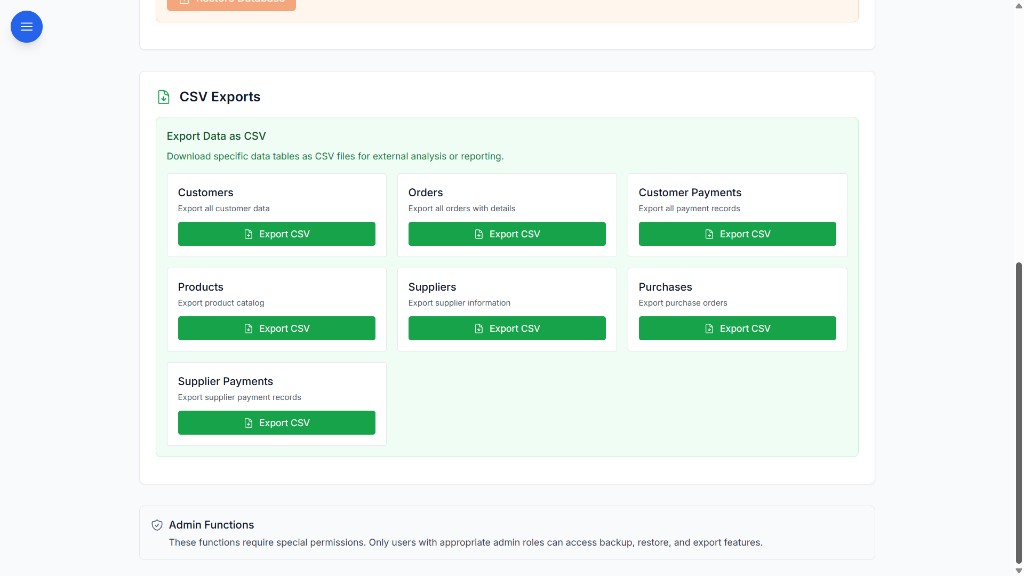
  • Backup policies you define, and exports you can take any day
  • No per-seat meter, so adding godown or sales staff adds no monthly bill
  • Access rules enforced by your own role and permission setup
  • You keep running BOOM even if you never speak to YNIIDI again
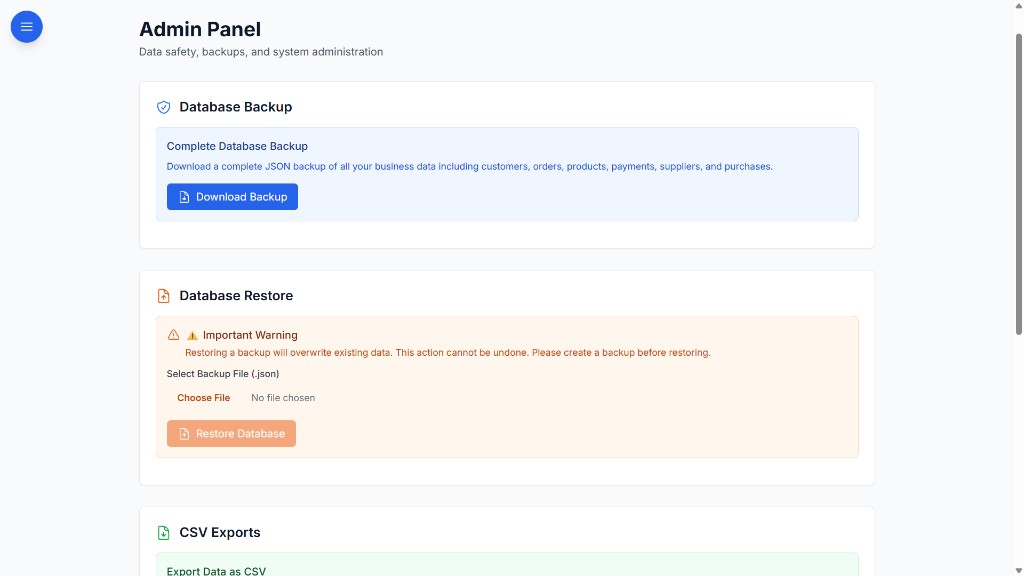
BOOM admin panel with users, roles and system controls

What self-hosting requires from you

Owning the system means owning a few responsibilities. They are not heavy, but they are real, and it is better to plan for them before go-live than after a disk fails.

  • A server. An on-premise machine, a VPS or a private cloud instance, on Linux or Windows Server with a standard web stack. We help plan the architecture during scoping.
  • Backups that are tested. BOOM includes backup, restore and data export. Someone still has to schedule backups, keep a copy off the server, and occasionally check that a restore works.
  • Someone responsible. One named person or your local IT vendor who owns server access, HTTPS, user accounts and restores. It does not need to be a full-time role.
BOOM CSV exports for customers, orders, products, suppliers and payments

Pricing signal

BOOM is a one-time license, scoped to your operation:

  • BOOM Lite from ₹2,00,000 — orders and billing, inventory, purchases, customers, suppliers and payables, payments, profit dashboard, tasks, team chat, roles and permissions, backup and export
  • BOOM from ₹5,00,000 — everything in Lite plus customer portal, supplier portal and payment gateway integration

Final price depends on scope. There are no per-seat fees and no mandatory subscription. Server hosting runs on your own infrastructure.

When BOOM is not the right choice

  • You want a low monthly tool and would rather not own a server
  • You are a very small or solo operation — a one-time investment from ₹2,00,000 won’t pay back
  • You need GST return filing, e-invoicing or statutory books from the same system
  • You run multiple legal entities across countries and need an SAP-scale suite

If that’s you, one of the other three options will serve you better, and we’ll tell you so on a call.

Self-hosted ERP questions

What is a self-hosted ERP alternative?

It is business operations software installed on a server you control, on-premise, a VPS or a private cloud, instead of the vendor’s cloud. Your database, backups and access rules stay with you. BOOM by YNIIDI is one: a customized operations platform for orders, inventory, purchases, dues, payments and portals, sold as a one-time license.

Is BOOM open source?

No. BOOM is commercial software sold as a one-time license and implemented by YNIIDI. You get a system customized to your workflows and set up on your server, rather than a free codebase you implement yourself.

What do we need in-house to self-host BOOM?

A server (on-premise, VPS or private cloud, Linux or Windows Server), a backup routine that someone actually checks, and one named person or IT vendor responsible for the server, access and restores. YNIIDI handles installation, data migration and team enablement.

Does BOOM handle GST returns and statutory accounting?

No. BOOM runs operations: orders, billing, stock, purchases, supplier and customer dues, payments and profit visibility. It does not file GST returns or replace your statutory accounting software, which most businesses keep alongside it.

How much does a self-hosted BOOM deployment cost in India?

BOOM Lite starts from ₹2,00,000 and BOOM starts from ₹5,00,000 (adding customer portal, supplier portal and payment gateway integration), both one-time licenses with no per-seat fees. Final price depends on scope. Server hosting is on your own infrastructure.

Who should not choose BOOM?

Businesses looking for a cheap monthly tool, very small or solo operations, and enterprises needing SAP-scale multi-entity suites. BOOM fits operations-heavy businesses that have outgrown Excel and WhatsApp and want to own their system.

See BOOM on your own operation

Tell us your order volume, team size and where you’d host it. We’ll show you the workflows and give you a scoped number.